April 2026 Routledge ISBN 9781003278146
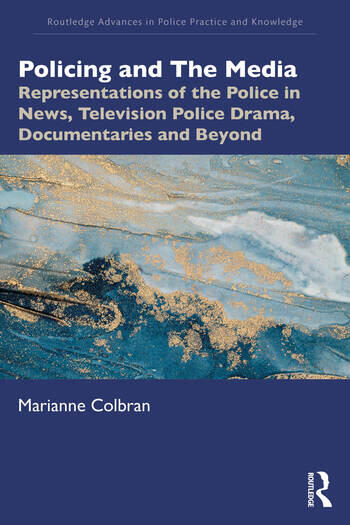
Reviews
“The media and the police have had a codependent relationship since they emerged in their modern forms over two centuries ago. Both serve crucial functions for each other, but they have often been in conflict. This excellent book reviews and analyses this tense but unending relationship between two pivotal powerful institutions. It charts and explains the amity and discord as it has fluctuated over time, and is comprehensive and up to date. Written by an eminent authority who has done much original research especially on processes of media production, it is a must read for all students, practitioners and policymakers concerned with policing. Composed in a clear, engaging style it will also fascinate general readers who have always provided large audiences for police stories in many formats.” – Robert Reiner, Emeritus Professor of Criminology, LSE Law School
“Colbran provides incisive analysis on media representations of policing amid growing awareness through media fragmentation that police do not treat everybody the same. Colbran emphasises that because many people will base their perceptions of the police on their media consumption, that every selection of a news media angle on police and policing involves omissions that never make it into the news media or social media frame. Through a range of insightful case studies from the UK, the US, and Australia, she puts media production processes into the frame. As she rightly notes, without critically analysing how, why and what makes it into the final media products that represent policing, we will continue to gloss the structural inequities that can be perpetuated through stereotypical interpretations of policing in digital societies.” – Justin Ellis, Senior Lecturer in Criminology, University of Newcastle, Australia
“This timely text offers a critical examination of the evolving relationship between police and the media at a moment when questions of representation, trust, and legitimacy are more pressing than ever. Drawing on her distinctive perspective as a former television writer, her empirical research into police-media relations, and her engagement with a wide body of international scholarship, Colbran expertly explores how police narratives are constructed across news, entertainment, and social media, and why these stories matter. Rich with case studies and examples, grounded in key conceptual frameworks, and featuring reflective questions at the end of each chapter, this book is an invaluable resource for students and scholars seeking an introduction the complex interplay between the police, media, and public perceptions.” – Alyce McGovern, Associate Professor in Criminology, University of New South Wales. Australia
“Colbran has produced an extensive exacting overview of the relationship between police, media and ultimately the public. Importantly, it explores submerged narratives and hidden agendas, exposing media simplification and exaggeration, as well plotting the extent that police will go to in furthering agendas. In a period where trust in police has waned, and police scandals are semi-regular news, Colbran’s exploration of police media power seems particularly pertinent. The book should be of immense value to students and scholars of policing studies and criminology.” – Murray Lee, Professor of Criminology, University of Sydney
What the book is about
Why do media representations of policing matter? And why should we study them? For many people, particularly those who are white and higher status, and who rarely come into contact with the police, they are the main source of knowledge about the police role in society. For the police, what they represent in society is as important as what they do and for that reason, being represented positively in the media is a key concern. But what if you are Black or young or LGBTQ + or come from another marginalised community where contact with the police may be both frequent and fractious. Does the image of the police as the thin blue line protecting society from chaos ring true? Given the number of scandals involving the police on both sides of the Atlantic, the repeated instances of police brutality towers Black citizens and the murders of Sarah Everard and George Floyd, why do the media still – more or less – present the police as society’s protectors?
This book brings together my empirical research over the last 12 years on how production processes and working relations between the police and the media affect the stories we are told about the police. It argues that police control over the way they are represented has never been tighter and that many of the crime news items we see or read are produced these days by the police and not by the media. This, in turn, gives us a very biased view of what the police are for, what they deem to be crime and who, in society, are termed as criminals.
The book also looks at key themes in media representations of policing – the idea of the ‘thin blue line’, or the concept that the police are a requisite of social order; the theme of ‘us and them’, or the stigmatisation of marginalised communities; and the trope of the ‘maverick cop’, who fights bureaucracy and ignores due process. The book traces the origins of policing back to its colonial roots and how the need to protect the rights of the wealthy and powerful against the Other – the theme of the “thin blue line” – leads directly into the “us and them” narrative: “them” being the dangerous and stigmatised Other threatening social order. It looks at the trope of the “maverick cop” and argues that this trope frames police brutality and ignoring due process as lawful policing.
The book argues that these narratives blind mainstream audiences to the real-life brutality and abuses of power against stigmatised communities. I end by asking: do these narratives help us to think about the right things, when we think of policing? Or are they stopping us from thinking critically about the role of policing in society and the harms of policing to Black, Brown and other stigmatised communities?
If you’d like to read more, you can order here:
Or here:
https://www.amazon.co.uk/Policing-Media-Representations-Television-Documentaries-ebook/dp/B0DSLKGDF3
Or any independent bookshop!
 Dr Marianne Colbran